

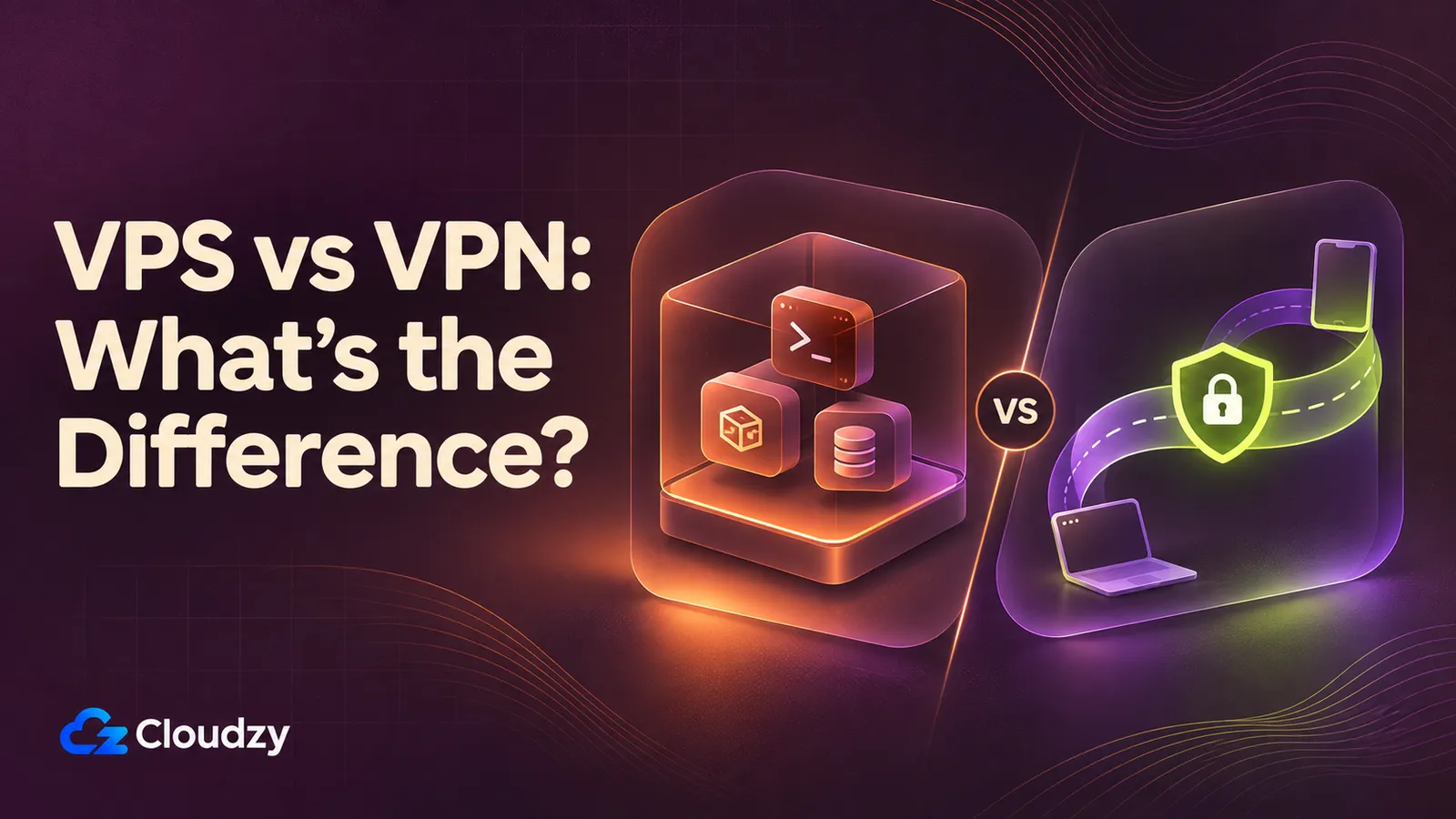
A VPS (virtual private server) is a virtual machine used to host websites, applications, and other software. A VPN (virtual private network) creates an encrypted connection between devices or networks. The key difference is their purpose: a VPS provides computing resources, while a VPN carries network traffic through a protected tunnel.
A VPS and a VPN belong to different technology categories: one provides a computing environment, while the other provides network connectivity. Their similar names do not make them substitutes.
VPS vs VPN at a Glance
What Is a VPS?
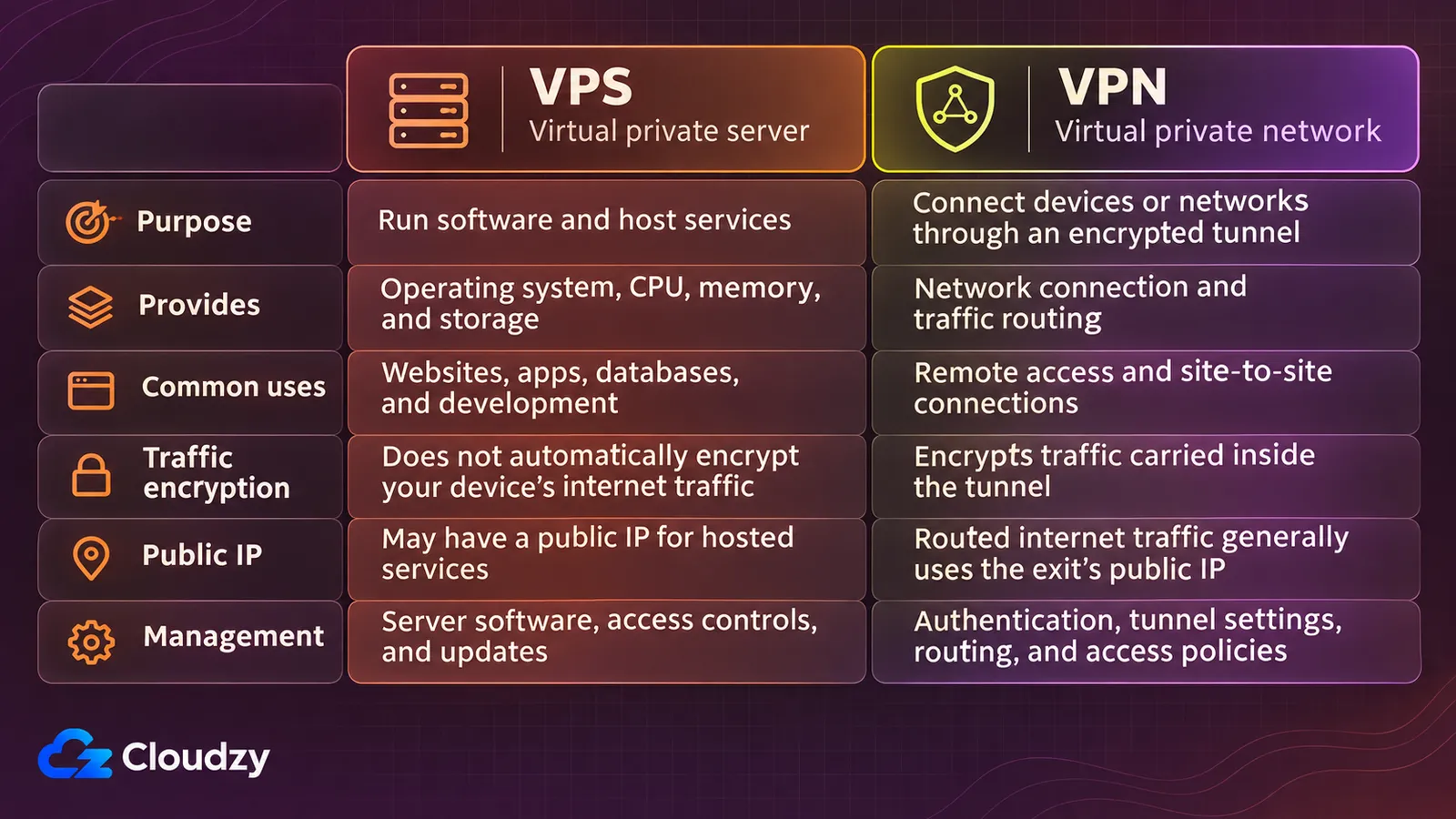
A virtual private server is a software-defined server environment on a physical host. Virtualization separates that host into virtual machines, each with its own operating system and allocated resources. The exact resource guarantees and degree of hardware sharing depend on the hosting plan.
A VPS can run web servers, applications, databases, and development environments. For example, an online store might use a VPS to run its website and application backend.
Administrative access usually allows the server operator to install software and change system settings. Management responsibilities depend on the service: an unmanaged server leaves more administration to the customer, while a managed service covers specified tasks.
The word “private” refers to the separated server environment. It does not mean that the machine is disconnected from the public internet, that its data is automatically encrypted, or that its operator is anonymous.
What Is a VPN?
A virtual private network connects devices or networks through an encrypted tunnel over another network, such as the internet. Traffic selected for the tunnel is encrypted between its endpoints. Cloudflare explains VPN tunneling.
A remote-access VPN lets a user connect to a private network, such as an employer’s internal systems. A site-to-site VPN links networks in different locations. Consumer VPN services commonly route internet traffic through an exit server.
These uses share the idea of a protected connection, but their routing differs. A company VPN may carry only traffic intended for internal resources. An internet-routing VPN may carry a broader portion of a device’s traffic. The configuration determines what enters the tunnel.
Key Differences Between VPS and VPN
Purpose and Common Uses
Hosting a website requires computing resources to process requests and store content. Connecting a remote employee to an internal application requires an access path to that application. These are different functions: the hosting environment runs the application, while the network connection carries the user’s requests.
How They Work
A VPS relies on virtualization. A hypervisor manages the physical host and its virtual machines, allowing multiple server environments to operate on shared hardware. Each environment runs its own operating system and software. IBM explains server virtualization.
A VPN relies on tunneling, authentication, and encryption. Its endpoints establish a connection and exchange traffic according to configured routes and access rules. The tunnel protects traffic while it travels between those endpoints.
Public IP addresses also serve different roles. An assigned VPS address helps clients reach services on the server. For internet traffic routed through a VPN exit, destination websites generally see the exit’s public IP. A VPN used only for private network access may leave ordinary browsing traffic on its existing route.
Security and Privacy
A VPS needs security controls appropriate to the software it runs. These commonly include updates, restricted administrative access, authentication, firewall rules, and backups. Separation from other virtual machines is useful, but it does not prevent vulnerabilities in the server’s own software.
Renting a VPS does not automatically encrypt browsing traffic from your laptop or phone. Encryption depends on the applications and protocols used for a particular connection.
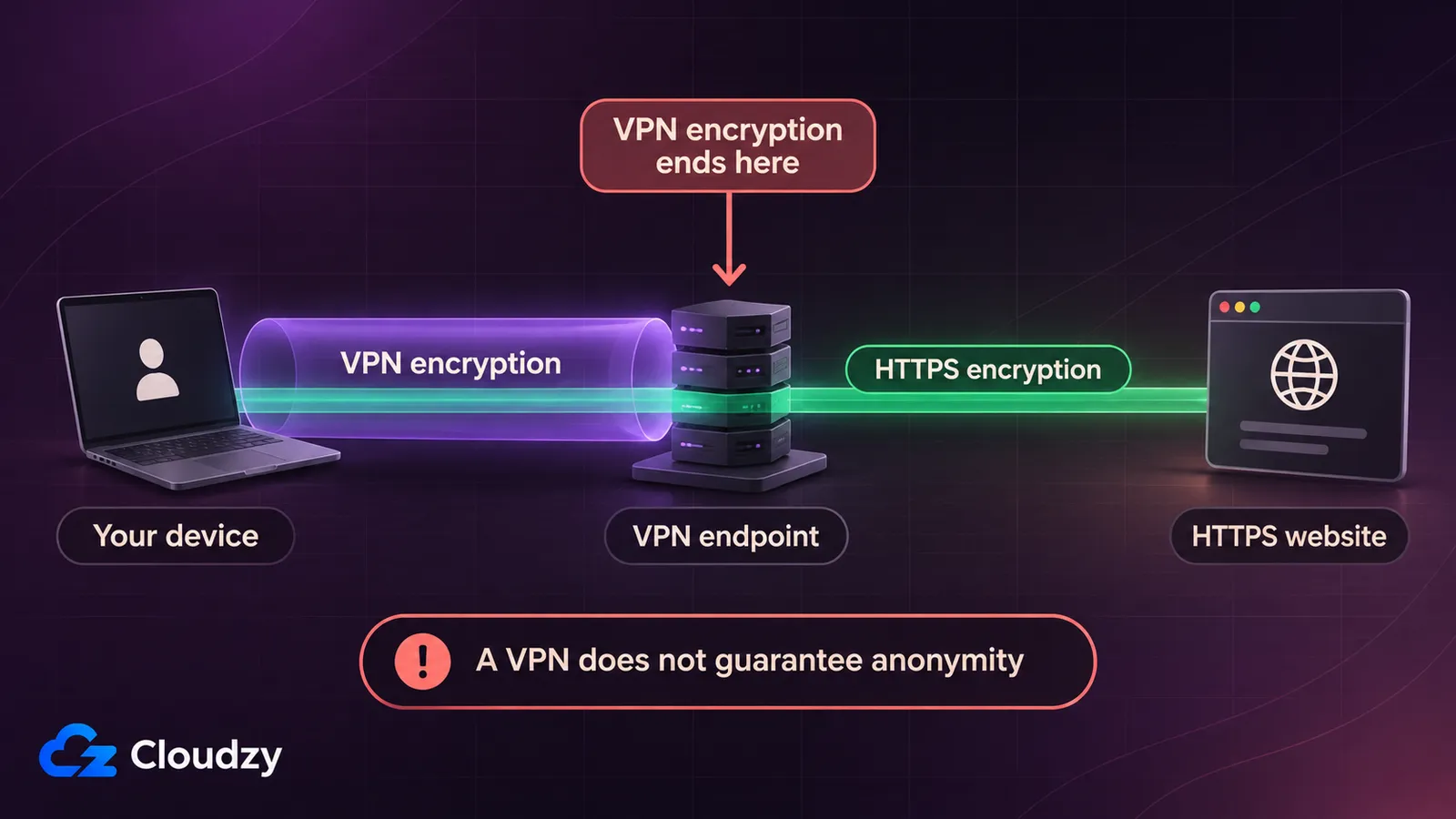
For traffic inside its tunnel, a VPN can reduce what the local network can inspect. HTTPS already encrypts web content between a browser and a website; a VPN adds protection across a different part of the connection. Cloudflare explains HTTPS encryption.
VPN encryption ends at the tunnel endpoint. Connections beyond it still need appropriate protection, such as HTTPS. Trust also remains relevant: the endpoint operator may have access to connection information, depending on the system and its policies.
Control and Management
VPS administration concerns the server environment: operating-system updates, application configuration, user permissions, storage, and service availability. The operator’s control and workload vary with the hosting service’s management scope.
VPN administration concerns connectivity: user authentication, tunnel configuration, routing, and access policies. An end user may connect through a preconfigured application, while an organization’s administrators manage the underlying network rules.
Their costs also cover different things. VPS charges generally relate to compute resources, storage, network usage, and management. VPN costs depend on the service model and may relate to subscriptions, users, or network capacity. A lower price alone does not establish which technology meets a particular requirement.
Frequently Asked Questions
Is a VPS the same as a VPN?
No. A VPS is a virtual server environment for running software. A VPN is a protected network connection that carries traffic between endpoints. Their similar abbreviations describe different technologies.
What does private mean in VPS and VPN?
In VPS, “private” describes the separated virtual server environment. In VPN, it describes the protected connection and access arrangement. Neither term, by itself, promises anonymity or complete isolation from the internet.
Does a VPS encrypt your internet traffic?
A VPS does not automatically encrypt traffic from your personal devices. Individual connections can use encrypted protocols, such as HTTPS or SSH, but that protection comes from the protocol and its configuration rather than from the VPS label.
Does a VPN provide hosting resources?
A VPN connection does not provide a general-purpose server environment for hosting a website or application. Its function is to carry network traffic. Computing resources, storage, and an operating system belong to a hosting service.
Does a VPN make you anonymous?
No. A VPN can change the public IP seen by websites for traffic routed through its exit, but account logins, cookies, and other identifiers can still reveal activity or identity. Its privacy benefits depend on routing, configuration, and the endpoint operator. See EFF’s explanation of VPN privacy limits.


Discussion
Comments
Sign in to join the discussion.