
Best Anonymous Payment Methods: What Still Works and What Changed
Anonymous payment methods that still work: cash, vouchers, prepaid cards, coinjoin, and Monero, with the ID checks and spending limits each one now carries.
Pick a country to see Cloudzy in your language.
The Cloudzy Blog
VPS, AI hosting, Linux, Windows, self-hosted tools, written by builders who run the servers behind the words.
Anonymous payment methods that still work: cash, vouchers, prepaid cards, coinjoin, and Monero, with the ID checks and spending limits each one now carries.
Umami analytics review: what the free Cloud plan includes, what the dashboard shows, whether you need a cookie banner, and where Umami stops.
Leaving Framer? Match your reason (per-site bills, CMS limits, no code export) to the right alternative, from Webflow and Ghost to self-hosted WordPress.
Is Rust worth learning? A verdict for developers weighing it: what its kernel status and TIOBE climb do and don't mean, and what it costs to build and run.
SOCKS5 proxy vs residential proxy vs VPN: one is a protocol, one describes the exit network, one tunnels traffic. See what affects classification and blocking.
The best AI tools for startups by price, free tier, and self-serve access, plus what a practical small-business AI stack costs.
What a VPS needs depends on why you bought it. Here's the essential VPS software for web hosting, trading, gaming, AI, VPNs, remote desktops, and more.
Apple Remote Desktop alternatives by function: screen control, shell commands at fleet scale, package pushes, inventory reports, and what each replaces.
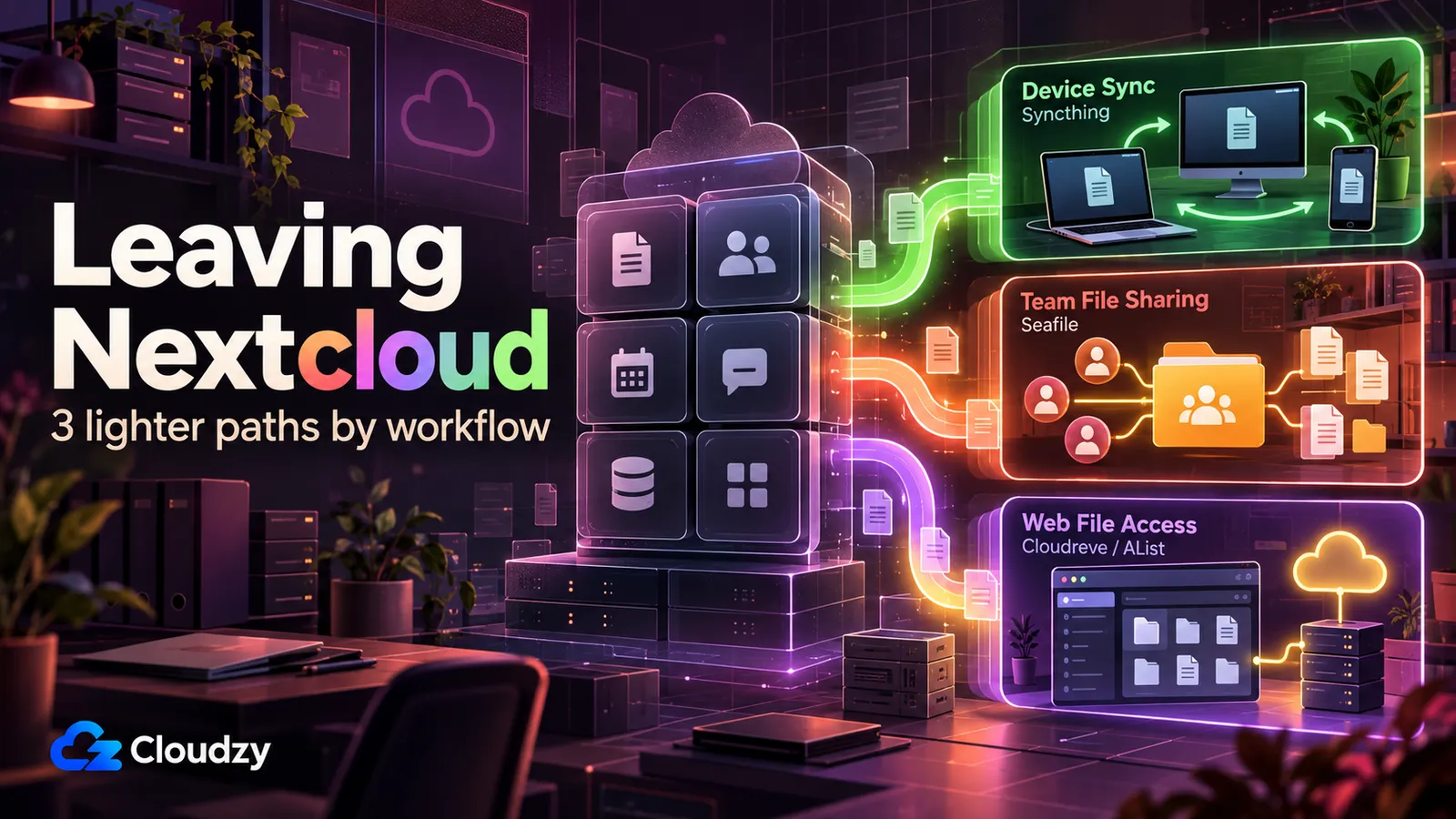
Nextcloud feels heavy because it tries to do everything. Pick the exit path that matches your real usage: Syncthing, Seafile, or a lightweight web portal.
Arch-based distro differences span the installer, kernel, package repos, desktop shell, and updates. See what CachyOS and Omarchy change layer by layer.
Compare Authentik, ZITADEL, Keycloak, and Authelia for self-hosted SSO. See protocols, VPS requirements, use cases, and a practical Vaultwarden OIDC setup.
Deploy a localhost app publicly without a VPS using a tunnel, free hosting, or static build, plus a LAN-only option for devices on your local network.